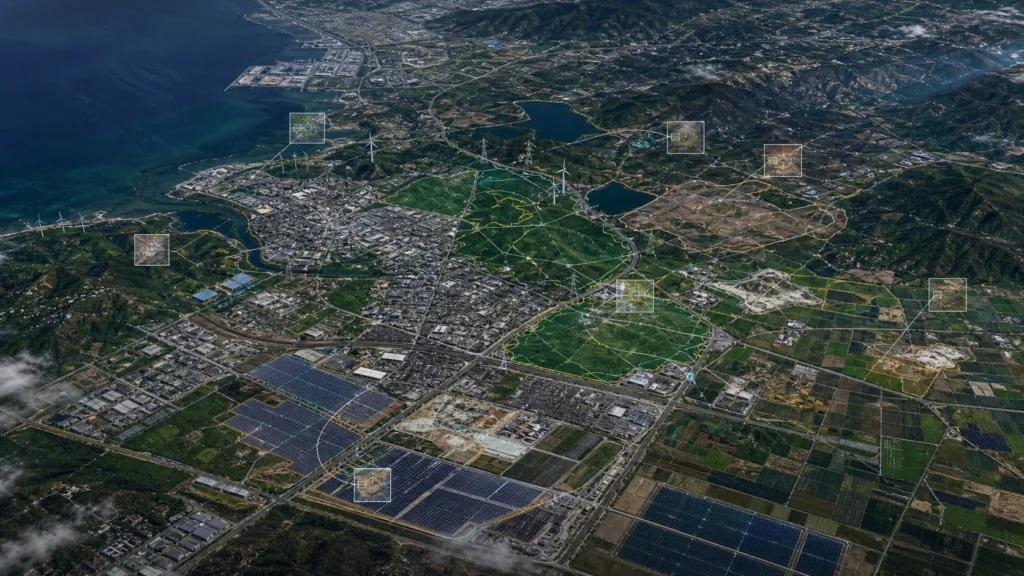
EDGE C helps construction, real estate, and infrastructure development companies build AI systems that detect site activity, monitor progress, map assets, identify risks, and turn visual/geospatial data into structured intelligence.
We work with drone imagery, satellite imagery, aerial data, CCTV/video feeds, GIS layers, inspection photos, site plans, asset records, and operational data to help teams monitor projects, compare progress over time, automate visual review, and make faster decisions.
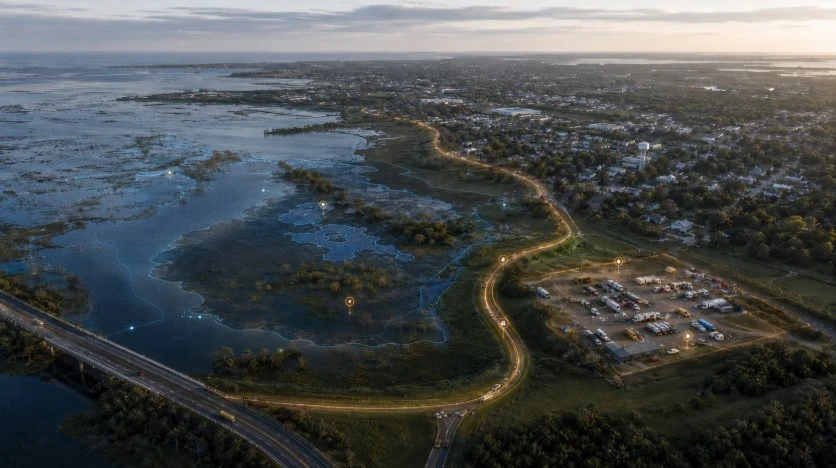
From construction sites and real estate developments to roads, bridges, utilities, industrial zones, smart cities, and large infrastructure programs, EDGE C builds visual intelligence systems that help teams understand what is happening, what changed, and what needs attention.
Build a smarter way to monitor construction progress, infrastructure assets, and development sites at scale.
Construction, real estate, and infrastructure development are becoming more visual, connected, and intelligence-driven. Project teams are using drones, cameras, satellite imagery, GIS systems, digital twins, BIM, inspection photos, and operational records to understand progress and manage risk.
The opportunity is clear: construction teams now have more site data than ever before, but much of it is still reviewed manually or stored across disconnected systems.
According to Deloitte’s 2025 Engineering and Construction Industry Outlook, U.S. construction spending crossed USD 2 trillion, while the sector saw a 10% increase in nominal value added and a 12% increase in gross output in 2024. (딜로이트)
According to ResearchAndMarkets, the global construction market is expected to grow from USD 15.78 trillion in 2024 to USD 20.44 trillion in 2029, supported by urbanization, population growth, government investment, industrialization, and smart city development. (Business Wire)
According to Future Market Insights, the construction drone market is projected to grow from USD 4.60 billion in 2025 to USD 11.17 billion by 2036, showing rising use of drones for surveying, monitoring, and site visibility. (Future Market Insights)
For construction, real estate, and infrastructure development companies, this creates a clear opportunity: turn visual and geospatial data into a structured intelligence layer that helps teams track progress, detect risks, validate work, and reduce manual reporting.
Physical speed studies have been the backbone of traffic engineering for years, but their limitations are significant — and becoming more obvious as cities expand.
Construction and infrastructure environments are physical, complex, and constantly changing. Materials move. Equipment shifts. Crews complete work in stages. Roads, foundations, structures, utilities, drainage, parking areas, and site boundaries evolve over time.
Many teams still rely on manual site walks, delayed reports, disconnected photos, spreadsheets, drone image folders, inspection documents, and separate project management systems.
That creates visibility gaps.
Common challenges include:
Construction and infrastructure teams are under pressure to deliver projects faster, control costs, reduce delays, improve safety, and provide better visibility to stakeholders.
Manual monitoring does not scale well when projects become larger, more complex, and more data-heavy.
According to the Associated General Contractors of America and NCCER 2025 Workforce Survey, the construction industry continues to face a skilled workforce shortage, with nearly 1,400 firms participating in the survey across the industry. (Associated General Contractors)
According to Turner & Townsend’s 2025 Global Construction Market Intelligence report, skills shortages remain the most reported issue across surveyed construction markets, while economic uncertainty and supply chain shifts make agility and vigilance more important. (Turner & Townsend)
According to Mordor Intelligence, construction companies are adopting drone-based photogrammetry, LiDAR scanning, and thermal imaging for real-time progress tracking, volumetric measurement, and risk assessment across major projects. (Mordor Intelligence)
Companies that continue relying only on manual reviews and disconnected workflows risk:
The companies that move faster will be those that convert visual, geospatial, and operational data into decision-ready intelligence.
EDGE C builds AI-powered visual intelligence systems for construction, real estate, and infrastructure development teams.
We help companies convert raw visual and geospatial data into structured, searchable, and actionable intelligence. Instead of manually reviewing thousands of site photos, drone captures, camera feeds, and reports, your teams can use AI systems to detect assets, classify progress, monitor change, generate reports, trigger alerts, and query project data.
EDGE C can help build systems that:
EDGE C does not sell satellite data or construction hardware. We help you build intelligence layers using your own data, third-party data, available visual/geospatial data, or project-specific data sources.
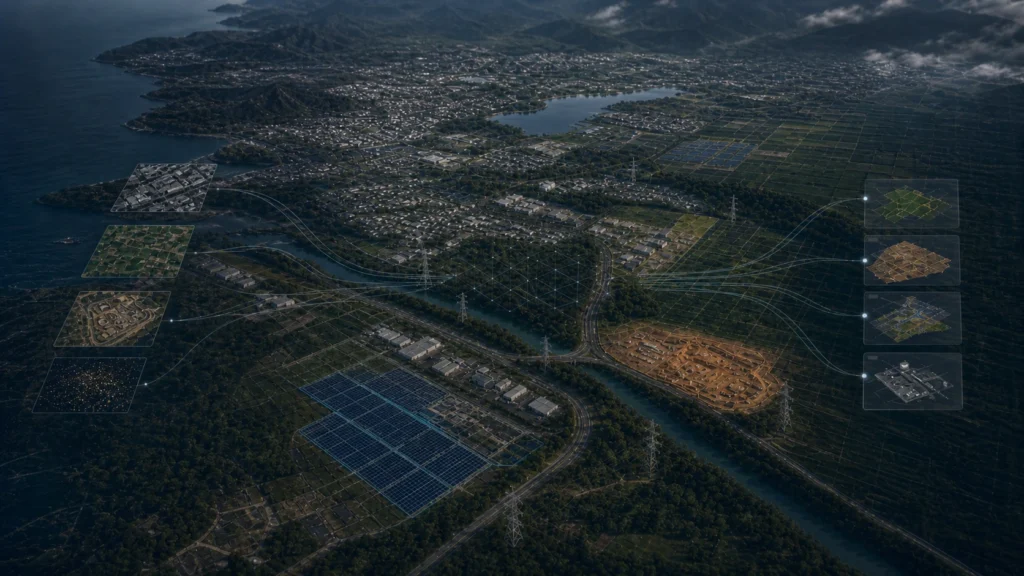
For Construction, Real Estate & Infrastructure Development, relevant data sources may include:
EDGE C can help analyze drone imagery, site photos, aerial data, or satellite imagery to identify completed work, active zones, unchanged areas, and visible progress over time.
Business value: Improve project visibility, reduce manual reporting effort, and give stakeholders clearer progress updates.
Compare historical and current imagery to detect new structures, land clearing, excavation, road changes, material movement, or site expansion.
Business value: Help teams understand what changed without manually comparing large volumes of imagery.
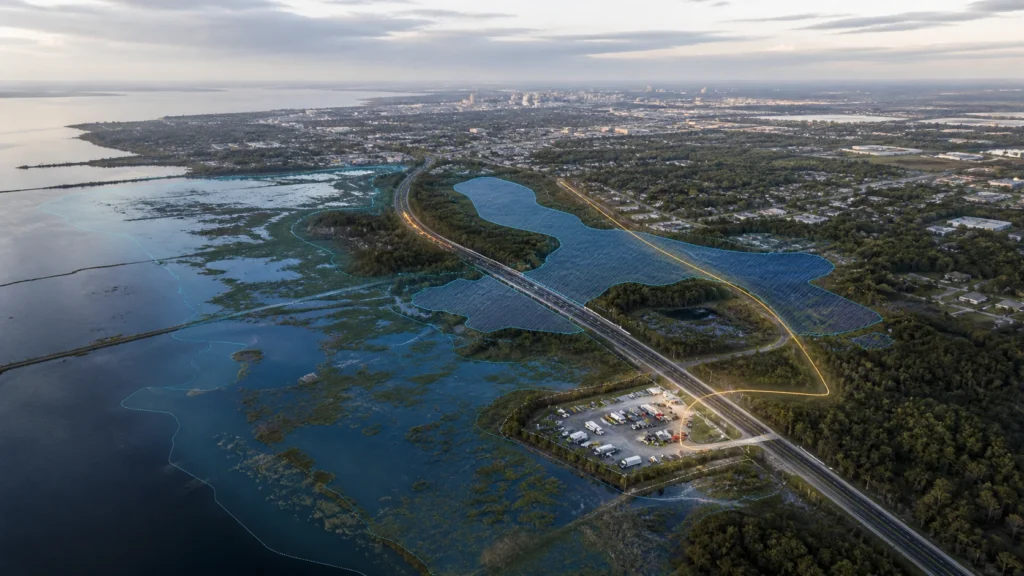
Use AI to detect and map roads, bridges, sidewalks, utility corridors, drainage features, parking areas, and other infrastructure assets.
Business value: Create GIS-ready datasets and keep infrastructure records more current.
Monitor development sites, building footprints, land-use changes, parking areas, access roads, and surrounding activity across project phases.
Business value: Support planning, investor updates, portfolio visibility, and development-stage reporting.
Convert drone captures, inspection images, and site camera feeds into structured records with detected objects, locations, timestamps, and categories.
Business value: Make visual site data searchable, measurable, and easier to use across teams.
Detect blocked routes, water accumulation, erosion, debris, unauthorized activity, or visible site issues from imagery and video.
Business value: Help teams identify operational risks earlier and prioritize field review.
Generate structured reports using detected progress, visual evidence, timestamps, locations, site zones, and supporting metadata.
Business value: Reduce manual documentation work and create more consistent reporting for owners, contractors, investors, and project teams.
EDGE C can help construction, real estate, and infrastructure teams ask natural-language questions across their visual, geospatial, and operational data.
Example queries include:
Instead of manually searching through drone folders, inspection reports, site photos, maps, and spreadsheets, teams can query a structured intelligence layer built from their visual and project data.
Construction, Real Estate & Infrastructure Development → AI Detection / Analysis → Structured Intelligence → Dashboards / APIs / Alerts / Reports / Query System
1. Data Ingestion
EDGE C helps ingest drone imagery, satellite imagery, aerial imagery, CCTV/video feeds, site camera footage, inspection photos, GIS layers, site plans, historical imagery, asset records, and project data.
2. AI Detection & Classification
Computer vision models detect and classify relevant site features, construction activity, infrastructure assets, equipment, materials, progress indicators, risks, and changes.
3. Structured Dataset Creation
Detected findings are converted into structured datasets with location, category, project zone, timestamp, confidence score, source reference, and metadata.
4. Monitoring & Change Detection
The system compares current and historical data to identify new work, completed areas, unchanged zones, site expansion, access changes, risk signals, or visible deviations from expected progress.
5. Delivery Layer
Insights are delivered through dashboards, GIS-ready layers, APIs, alerts, automated reports, project views, or natural-language query systems.
EDGE C can help construction, real estate, and infrastructure development companies build:
Construction, real estate, and infrastructure development teams already collect valuable visual and geospatial data. The next step is turning that data into structured intelligence that helps teams monitor progress, detect change, reduce manual review, and make faster decisions.
EDGE C helps you build AI systems that connect imagery, cameras, GIS layers, site records, and project data into practical tools your teams can use.
Build a Construction Intelligence Layer
Tell us about your project. We’ll be in touch soon.
To get register with Edgec please send a request on below email, Thank you!
info@edgec.io