
EDGE C helps security, surveillance, safety, and monitoring organizations build AI systems that detect activity, identify risks, structure video and image data, and turn visual feeds into actionable intelligence.
We work with CCTV/video feeds, drone imagery, aerial imagery, satellite imagery, inspection photos, facility maps, GIS layers, access records, and operational data to help teams monitor environments, automate review, trigger alerts, and make faster decisions.
From public spaces and industrial sites to critical infrastructure, facilities, campuses, transport hubs, and high-risk zones, EDGE C builds visual intelligence systems that help teams understand what is happening, what changed, and what needs attention.
Build smarter monitoring systems that help security and safety teams move from passive observation to actionable intelligence.
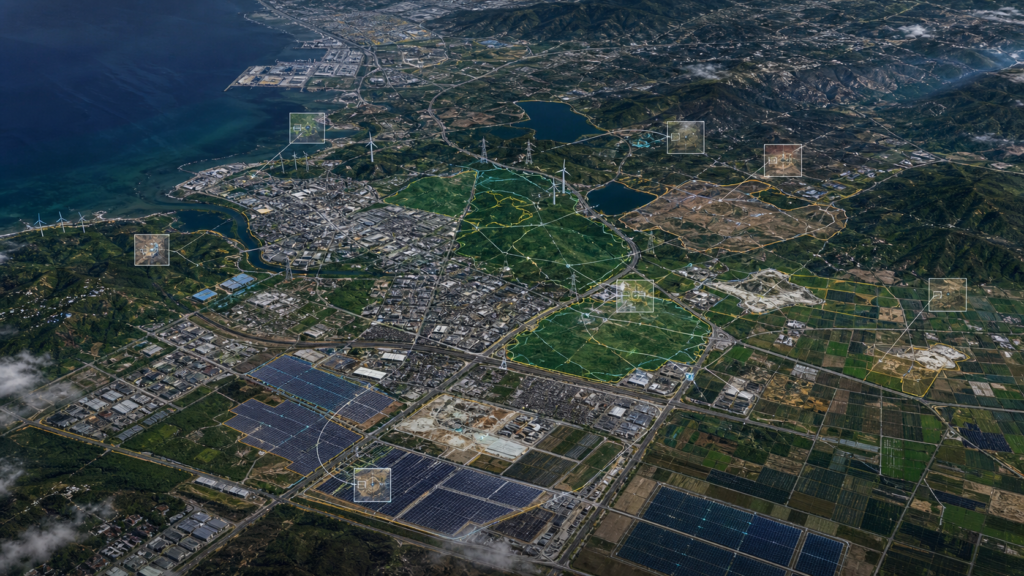
Security, surveillance, and safety operations have historically depended on people watching cameras, reviewing footage after incidents, and manually documenting events. That model is becoming harder to scale.
Organizations now manage more cameras, more sites, more video footage, more compliance requirements, and more operational risk than ever before. A single facility, city, industrial site, logistics hub, or infrastructure operator can generate thousands of hours of visual data every day.
The industry is shifting from passive recording toward AI-assisted monitoring, automated alerts, searchable video, edge analytics, and integrated command dashboards.
According to MarketsandMarkets, the video surveillance industry is being driven by demand for enhanced public safety and asset protection, with AI and analytics enabling real-time monitoring and proactive threat detection. (MarketsandMarkets)
According to Axis Communications’ 2025 State of AI in Video Surveillance report, AI is increasingly recognized for its ability to improve security, safety, operational efficiency, and business intelligence across video surveillance environments. (Axis Communications)
According to Technavio, the global AI in video surveillance market is expected to grow by USD 10.9 billion from 2025 to 2029, at a 22.7% CAGR, showing rapid adoption of AI-powered monitoring systems. (Technavio)
For security, surveillance, and safety organizations, this creates a clear opportunity: turn cameras, imagery, and monitoring data into structured intelligence that helps teams detect events faster, reduce manual review, and respond with better context.
Security and safety teams often have access to cameras and visual data, but not enough intelligence from that data.
CCTV systems, drone footage, inspection photos, access logs, incident reports, and facility maps are often stored in separate systems. Operators may need to manually watch live feeds, search through recordings, compare images, or coordinate across disconnected tools.
That creates delays and blind spots.
Common challenges include:
Security and safety teams are under pressure to respond faster, monitor wider environments, reduce risk, and support compliance without adding unlimited staff.
Cameras alone are no longer enough. Organizations need systems that can detect what matters, filter noise, prioritize alerts, and turn video evidence into usable intelligence.
According to MarketsandMarkets, cloud-based AI video surveillance is gaining traction because it offers scalability, remote accessibility, and lower infrastructure costs, allowing organizations to adapt surveillance capabilities without heavy upfront infrastructure. (MarketsandMarkets)
According to OSHA, workplace injury and illness data is collected and published to support worker safety and help identify unsafe workplaces and occupational hazards. This reflects the growing importance of better safety monitoring, reporting, and prevention systems. (OSHA)
According to the U.S. Bureau of Labor Statistics, fatal and nonfatal workplace injury and illness data remains a key source for understanding safety performance across industries. (Bureau of Labor Statistics)
Organizations that continue relying only on manual monitoring and disconnected systems risk:
The organizations that move faster will be those that treat visual data as an intelligence layer, not just a recording archive.
EDGE C builds AI-powered visual intelligence systems for security, surveillance, and safety operations.
We help teams turn raw video, imagery, maps, inspection photos, and operational data into structured intelligence. Instead of relying only on manual camera review, your teams can use AI systems to detect objects, classify events, monitor zones, trigger alerts, generate reports, and search historical visual data.
EDGE C can help build systems that:
EDGE C does not sell surveillance hardware or claim ownership of proprietary datasets. We help you build intelligence layers using your own camera feeds, imagery, operational data, third-party data, or available visual/geospatial sources.
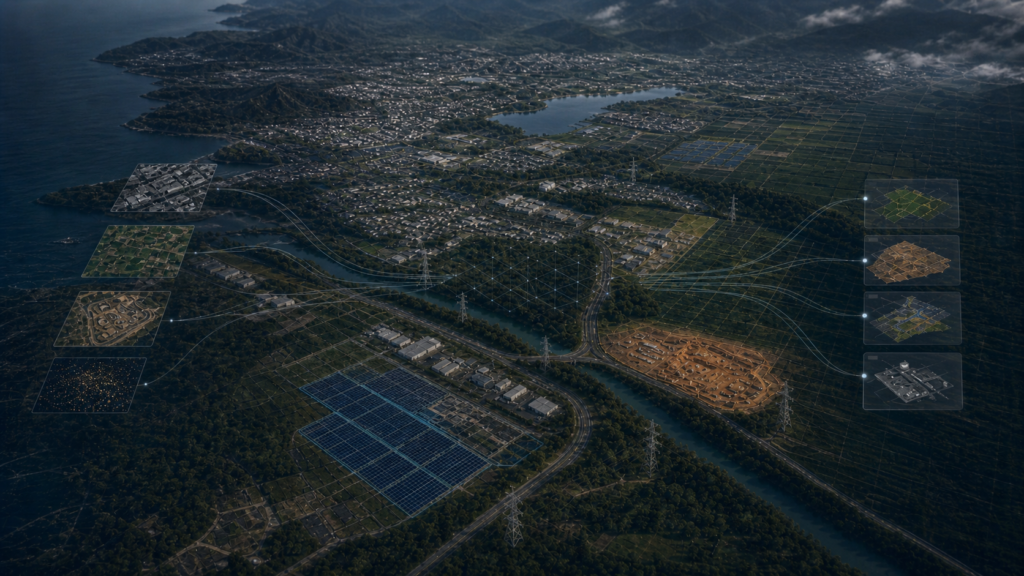
For Security, Surveillance & Safety, relevant data sources may include:
1. AI-Powered CCTV Monitoring
EDGE C can help build systems that analyze video feeds for people, vehicles, restricted-zone activity, safety hazards, and event patterns.
Business value: Reduce reliance on constant manual monitoring and help teams focus on events that need review.
2. Smart Alerting and Incident Detection
Create alert workflows that notify teams when specific objects, movements, hazards, or zone violations are detected.
Business value: Improve response speed while reducing missed events and unnecessary manual review.
3. Searchable Video Intelligence
Convert video footage into searchable records by time, location, camera, object type, event type, and risk category.
Business value: Make investigations faster and reduce the time required to review historical footage.
4. Site and Perimeter Monitoring
Monitor facility boundaries, access points, yards, gates, parking areas, and restricted zones using video, imagery, and maps.
Business value: Improve visibility across large or distributed sites and support faster security response.
5. Safety Hazard Detection
Use visual data to identify visible hazards such as blocked pathways, unsafe zones, water accumulation, smoke indicators, obstructions, or activity near dangerous areas.
Business value: Support proactive safety monitoring and help teams prioritize intervention before incidents escalate.
6. Multi-Site Security Dashboards
Unify video detections, alerts, site maps, camera locations, incident logs, and operational data into centralized dashboards.
Business value: Give security and safety leaders a clearer view across facilities, branches, campuses, yards, or infrastructure sites.
7. Automated Incident Reporting
Generate structured incident summaries using detected events, timestamps, locations, visual references, and relevant metadata.
Business value: Reduce manual reporting effort and create clearer records for internal review, compliance, or investigations.
EDGE C can help security, surveillance, and safety teams ask natural-language questions across visual and operational data.
Example queries include:
Instead of manually searching through footage, reports, maps, and event logs, teams can query a structured intelligence layer built from their visual monitoring data.
Security, Surveillance & Safety → AI Detection / Analysis → Structured Intelligence → Dashboards / APIs / Alerts / Reports / Query System
1. Data Ingestion
EDGE C helps ingest CCTV/video feeds, camera archives, drone imagery, aerial imagery, facility maps, GIS layers, inspection photos, access records, incident reports, and operational datasets.
2. AI Detection & Classification
Computer vision models detect and classify relevant objects, people, vehicles, activities, hazards, zone violations, site changes, and incident signals based on your use cases.
3. Structured Dataset Creation
Detected events are converted into structured records with location, timestamp, camera ID, object type, event category, confidence score, zone reference, and supporting metadata.
4. Monitoring & Change Detection
The system monitors live or historical data to identify activity patterns, new risks, repeated incidents, restricted-zone events, environmental hazards, or physical changes across sites.
5. Delivery Layer
Insights are delivered through dashboards, alerts, APIs, automated reports, incident logs, map interfaces, or natural-language query systems.
EDGE C can help security, surveillance, and safety organizations build:
Security, surveillance, and safety teams already have access to valuable visual data. The next step is turning that data into structured intelligence that helps teams detect events, monitor risk, respond faster, and reduce manual review.
EDGE C helps you build AI systems that connect video feeds, imagery, maps, alerts, and operational records into practical tools your teams can use.

Tell us about your project. We’ll be in touch soon.
To get register with Edgec please send a request on below email, Thank you!
info@edgec.io