
EDGE C helps industrial and manufacturing companies build AI systems that detect defects, monitor assets, analyze visual data, automate inspection, and turn factory-floor information into structured intelligence.
We work with CCTV/video feeds, inspection photos, production-line imagery, drone imagery, thermal imagery, facility maps, asset records, sensor data, maintenance logs, and operational systems to help teams improve visibility across plants, production lines, warehouses, yards, and industrial sites.
From quality inspection and equipment monitoring to safety workflows, facility intelligence, production visibility, and predictive maintenance support, EDGE C builds practical AI systems that help industrial teams detect issues faster, reduce manual review, and make better decisions.
Build smarter manufacturing intelligence systems that connect visual, operational, and asset data into tools your teams can use.
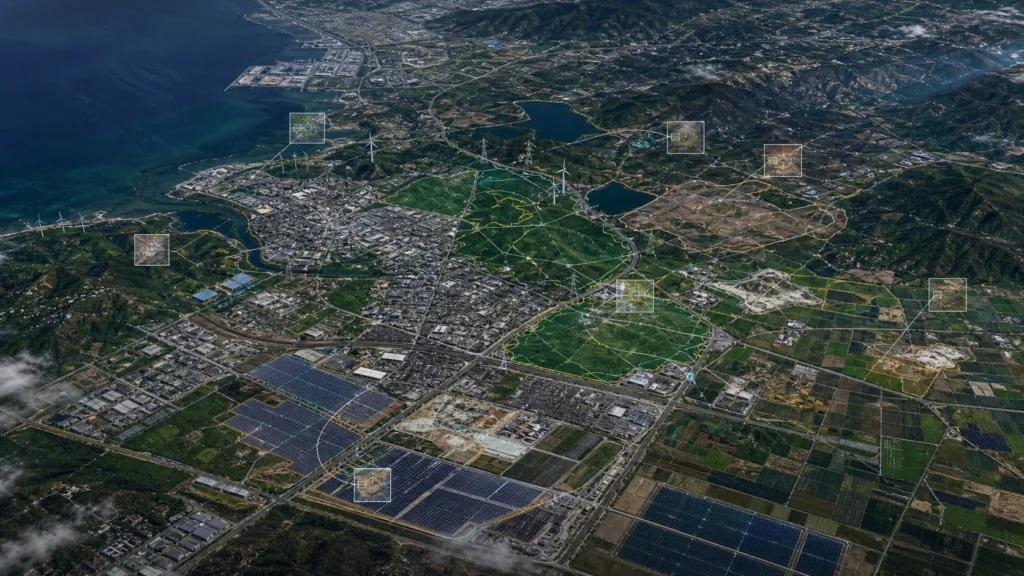
Industrial and manufacturing companies are already familiar with automation. The next shift is turning factory data, visual feeds, inspection images, machine data, and operational records into intelligence that supports faster decisions.
Manufacturers are under pressure to improve productivity, reduce downtime, maintain quality, manage labor shortages, and adapt to supply chain volatility. At the same time, factories are producing more visual and operational data than ever before.
Production cameras, inspection systems, robots, sensors, maintenance systems, ERP data, warehouse systems, and facility cameras can all reveal what is happening. But without a connected intelligence layer, much of that data remains underused.
According to Deloitte’s 2025 Manufacturing Industry Outlook, manufacturers are prioritizing targeted AI investments, smart operations, talent strategy, supply chain agility, and high-value digital projects as the sector navigates uncertainty and rising operational complexity. (딜로이트)
According to Deloitte’s 2025 Smart Manufacturing Survey, based on 600 manufacturing executives, companies adopting smart manufacturing are becoming more agile, productive, and attractive to talent. (딜로이트)
According to ResearchAndMarkets, the industrial machine vision market is valued at USD 12.89 billion in 2025 and is projected to reach USD 17.47 billion by 2029, growing at a 7.9% CAGR, reflecting rising demand for automated inspection, quality control, measurement, and surface inspection. (Research and Markets)
For industrial and manufacturing companies, this creates a clear opportunity: use visual intelligence and AI systems to monitor production, detect issues, structure factory data, and reduce dependence on slow manual review.
Manufacturing operations generate a constant flow of visual, machine, quality, maintenance, and safety data. But many teams still rely on manual inspection, disconnected dashboards, spreadsheets, production reports, camera footage, and siloed systems.
That creates visibility gaps between what is happening on the floor and what decision-makers can actually see.
Common challenges include:
Manufacturers are being pushed to improve productivity while dealing with cost pressure, labor constraints, quality expectations, and downtime risk.
Manual inspection and disconnected workflows make it harder to respond quickly. When data is delayed or unstructured, quality issues can spread, downtime can last longer, safety risks can be missed, and operational teams spend too much time searching for answers.
According to Siemens’ True Cost of Downtime 2024, unscheduled downtime can consume 11% of annual revenues for the world’s 500 largest companies, totaling around USD 1.4 trillion. (Institute for Supply Management)
According to MaintainX’s State of Industrial Maintenance Report 2024, the average cost of one hour of unplanned downtime is around USD 25,000, while larger organizations can face costs above USD 500,000 per hour. (MaintainX)
According to 360iResearch, the computer vision in manufacturing market was estimated at USD 7.02 billion in 2025 and is expected to reach USD 16.21 billion by 2032, with use cases including quality control, predictive maintenance, and process optimization. (360iResearch)
Companies that continue relying only on manual review and disconnected tools risk:
The manufacturers that move faster will be those that turn visual, operational, and asset data into structured intelligence.
EDGE C builds AI-powered visual intelligence systems for industrial and manufacturing teams.
We help companies convert raw visual, operational, and facility data into structured, searchable, and actionable intelligence. Instead of relying only on manual inspection, disconnected footage, or static reports, your teams can use AI systems to detect defects, classify events, monitor assets, generate alerts, create reports, and query factory data.
EDGE C can help build systems that:
EDGE C does not sell manufacturing hardware or claim ownership of proprietary production data. We help you build intelligence layers using your own visual data, operational data, third-party data, or available industrial data sources.
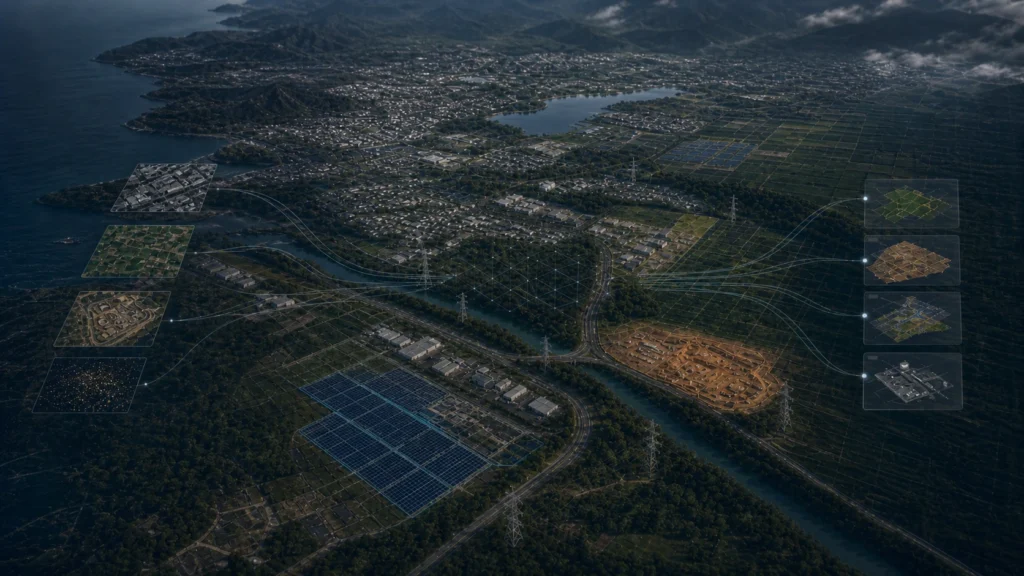
For Industrial & Manufacturing, relevant data sources may include:
1. AI-Powered Visual Quality Inspection
EDGE C can help build systems that detect visible product defects, missing parts, surface anomalies, packaging issues, and assembly errors from production-line imagery or inspection photos.
Business value: Improve inspection consistency, reduce manual review, and help teams catch quality issues earlier.
2. Production Line Monitoring
Use video and image data to monitor line activity, detect bottlenecks, identify stoppages, and track visible process deviations.
Business value: Improve production visibility and help supervisors respond faster to operational issues.
3. Equipment and Asset Monitoring
Analyze visual, thermal, and operational data to monitor machines, facility assets, maintenance zones, and equipment condition indicators.
Business value: Support maintenance prioritization, reduce blind spots, and improve asset visibility across facilities.
4. Safety Hazard Detection
Use visual intelligence to identify blocked walkways, spills, restricted-zone activity, unsafe proximity to machinery, smoke indicators, debris, or other visible safety risks.
Business value: Help teams detect hazards earlier and support safer factory and facility operations.
5. Warehouse and Yard Intelligence
Detect forklifts, pallets, vehicles, containers, loading zones, blocked routes, storage activity, and yard congestion from CCTV, drone imagery, or facility cameras.
Business value: Improve operational visibility across warehouses, yards, and logistics areas connected to manufacturing sites.
6. Automated Inspection Reporting
Generate structured inspection reports using detected issues, visual evidence, timestamps, asset references, production zones, and metadata.
Business value: Reduce manual documentation effort and create clearer audit trails for quality, maintenance, and operations teams.
7. Natural-Language Factory Query Tools
Create query systems that allow teams to ask questions across visual detections, quality records, maintenance logs, facility zones, and operational data.
Business value: Help supervisors, engineers, and managers find answers faster without searching through footage, folders, spreadsheets, and disconnected dashboards.
EDGE C can help industrial and manufacturing teams ask natural-language questions across visual, operational, and asset data.
Example queries include:
Instead of manually searching through camera footage, inspection folders, quality reports, and maintenance systems, teams can query a structured intelligence layer built from their factory and facility data.
1. Data Ingestion
EDGE C helps ingest CCTV/video feeds, production-line imagery, inspection photos, thermal imagery, facility maps, asset records, quality data, maintenance logs, sensor data, and operational datasets.
2. AI Detection & Classification
Computer vision models detect and classify relevant defects, objects, machines, safety events, production activity, asset conditions, and facility changes based on your use cases.
3. Structured Dataset Creation
Detected findings are converted into structured datasets with issue type, product or asset reference, location, production line, timestamp, shift, confidence score, image source, and supporting metadata.
4. Monitoring & Change Detection
The system monitors live or historical data to identify repeated issues, equipment changes, line disruptions, safety risks, facility changes, or abnormal activity patterns.
5. Delivery Layer
Insights are delivered through dashboards, APIs, alerts, automated reports, quality review tools, maintenance workflows, or natural-language query systems.
EDGE C can help industrial and manufacturing companies build:
AI visual inspection systems
Defect detection workflows
Production line monitoring dashboards
Machine vision intelligence tools
Factory safety monitoring systems
Equipment and asset monitoring workflows
Warehouse and yard intelligence dashboards
Automated inspection reporting systems
Quality control dashboards
APIs for detections and operational data
Alerts for defects, hazards, or abnormal activity
Natural-language query tools
Maintenance support dashboards
Decision-support systems
Facility intelligence platforms
Inspection automation workflows
Industrial and manufacturing companies already collect valuable visual and operational data. The next step is turning that data into structured intelligence that helps teams detect issues, monitor facilities, reduce manual review, and make faster decisions.
EDGE C helps you build AI systems that connect cameras, inspection images, asset records, quality data, maintenance logs, and operational systems into practical tools your teams can use.
Turn Factory Data Into Actionable Intelligence
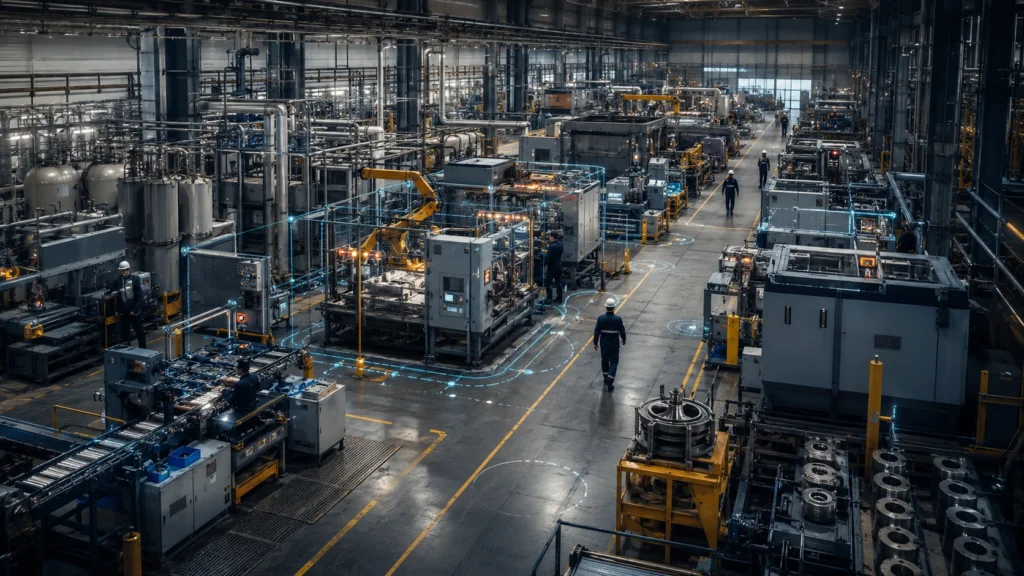
Tell us about your project. We’ll be in touch soon.
To get register with Edgec please send a request on below email, Thank you!
info@edgec.io